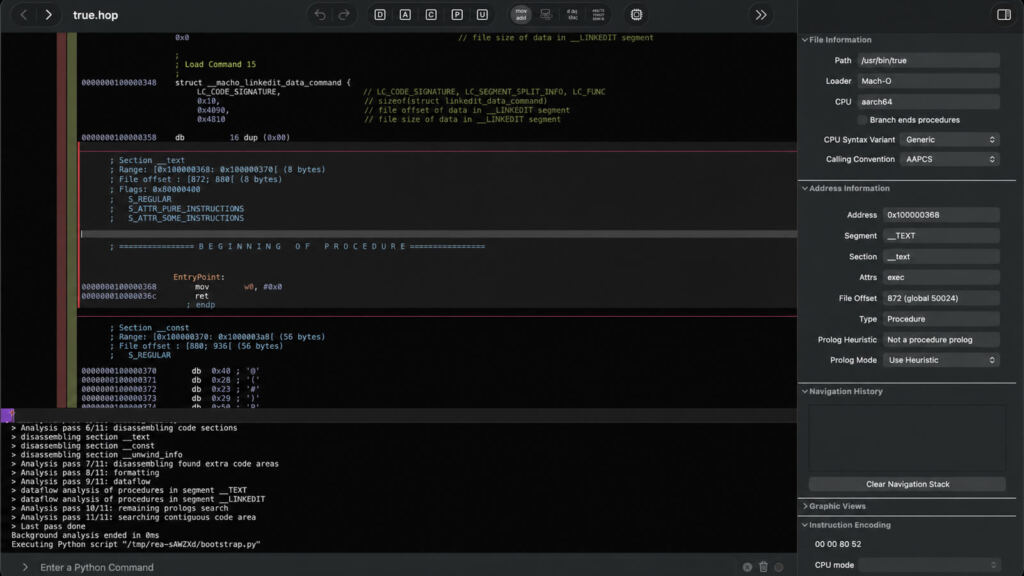
Reverse engineering is the work of understanding how a program works without its source code. It underpins almost everything game preservation does today, from decompilations that became native PC versions to studies of old games. Now an open-source tool wants to put artificial intelligence agents on the job: REA, short for Reverse Engineer Anything.
What REA is
Created in April 2026 and released under the MIT license, the project has passed 360,000 stars on GitHub. It connects AI coding assistants such as Claude Code, Codex, Cursor and Gemini CLI to analysis tools through MCP, a standard for linking agents to other programs. For native binaries, REA uses tools researchers already know, such as Ghidra, Hopper or IDA. It also analyzes JavaScript and Electron apps, .NET programs, Android apps, game files made in Unity and Godot and even old DOS code. Analysis runs on the user’s own computer, and each conclusion comes with the evidence and limitations behind it.
What it has done with games
Two case studies published by the project touch the gaming world directly. In the classic DX-Ball, REA followed a sound call into the function that calculates audio panning and rebuilt the code in C: the result passes 3,205 tests against the original x86 and reproduces all 63 bytes of the compiled function. In Touhou 4, on PC-98, the tool recovered the bullet-ring calculation from 16-bit instructions and compared the reconstruction with what the era’s compiler produced.
Why it matters for preservation
Decompiling a game by hand takes years, as projects we started covering in the Fans vs. official releases series show. Tools like REA could speed up the work of understanding and documenting code. But the topic divides the community: the Zelda 64: Recompiled team, for example, bans any use of generative AI in its project, and much of the industry still resists the technology.
REA itself states it is meant for lawful research, education, interoperability, software preservation and analysis of software you own or are authorized to examine. Using the tool does not make legal what is not: copying and distributing games is still piracy. At SavePoint, we will use the project’s explanations and studies as a source when describing how reverse engineering works.
Where to buy: Graphics cards on Amazon
Source: REA (official GitHub repository and rea.tools).

 Max Xavier

 Sapo
 Hélio