

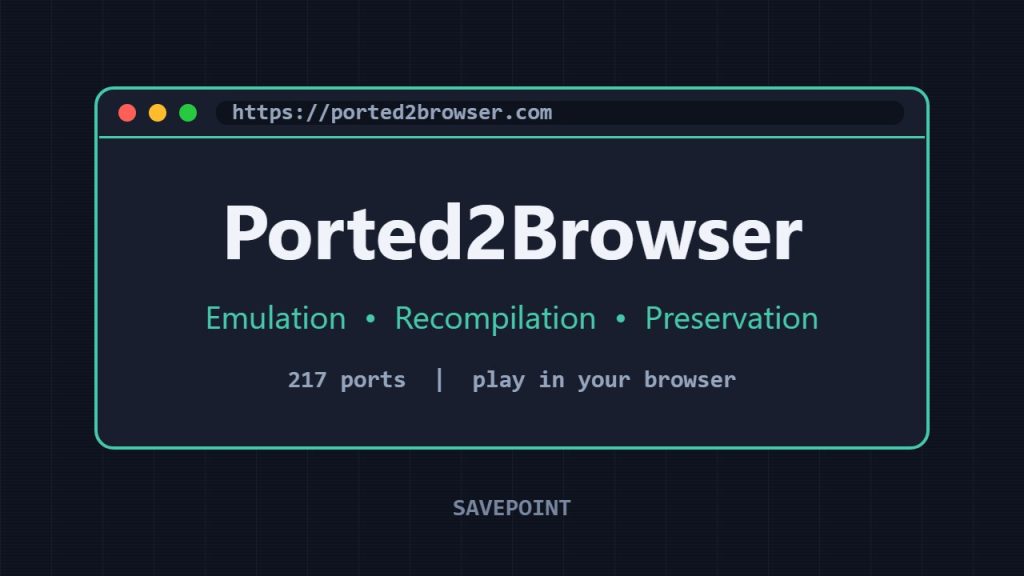
A lovely detail first: preserving games is also caring for the art of the people who made them. How many of the games that shaped your life can you still play today without hunting down an old console, a pricey cartridge or a PC that no longer exists? Ported2Browser wants to make that answer easier: it is an independent directory that gathers games ported to run straight in your browser, all in one place.
A whole catalog in one tab
At the time of writing, the site lists 217 ports, from DOS and Windows classics to Nintendo 64, PlayStation, Game Boy and even ZX Spectrum games. You can filter by platform, genre and even by supported input (keyboard and mouse, gamepad or touch), save favorites, rate games and see what you launched last. Each entry also links to HowLongToBeat, so you know how long a game takes to finish.
The key detail: Ported2Browser does not host the games. It works as a showcase, and every title runs on the port creator’s own website. Anyone can submit new games, and there is a button to report broken links, which keeps the collection alive and community-driven.
Emulation and recompilation: two ways in
Behind these ports are two techniques the community has been refining for decades. Emulation recreates the original hardware in software, so the game runs as if it were on the real console. Recompilation (along with decompilation projects) goes further: it translates the game’s code so it runs natively on other platforms, often with upgrades like higher resolutions and frame rates. The site already has a dedicated category for recompiled ports.
What brings all of this to the browser is WebAssembly, the technology that lets Chrome, Firefox and Safari run demanding code at close to native speed. No download, no install, on practically any computer, and in some cases even on your phone.
Why this matters for preservation
Consoles go out of production, digital stores shut down and games get delisted. When that happens, a piece of video game history risks disappearing. Projects like Ported2Browser show the other side: the browser is the most universal platform there is, and a game that runs there can be reached by anyone, anywhere, today and for years to come.
The catalog also highlights the creative side of the scene, with fangames, mash-ups, whole-series compendiums and works in progress. Highlights include open-source games like Tremulous and AssaultCube, Happy Wheels published by its own creator, and Cloudflare’s demo of 1993’s DOOM, with multiplayer for up to four players right in the browser.
Keep in mind that, since each port runs on its creator’s site, the rights situation varies from project to project: there are official demos, open-source games and fan-made ports. When a game is still on sale, buying the official version remains the best way to support its creators and help more classics get re-released.
Worth a visit
If you love gaming history, or just want a quick dose of nostalgia, Ported2Browser is a great place to start. It is also a reminder that game preservation is increasingly in the hands of the community.
Read also: Amazon Luna in October: the free games for Prime members, another way to play straight from your browser, and Razer’s new Pokémon headsets.
You can see the care in every page of the directory; it’s worth a bookmark.
More on emulation, recompilation and preservation in our Game preservation hub.
Source: Ported2Browser.


Comments (2)
The no-download rule is the right call – pointing people to official stores instead of mirroring files keeps the archive clean legally and ethically, and the browser route covers everything else. js-dos and EmulatorJS have both matured to the point where booting Wing Commander or Road Rash in a tab just works, save states included. The Ported2Browser directory sounds like a perfect companion piece too; showcasing ports without hosting them is exactly how a community catalog should work.
Yes. We’re going through what seems to be an “emulation renaissance”: Now that it’s easier than ever to reverse-engineer code, porting games to PC is definitely going to make gaming even more accessible for people with low-to-mid-powered hardware.