

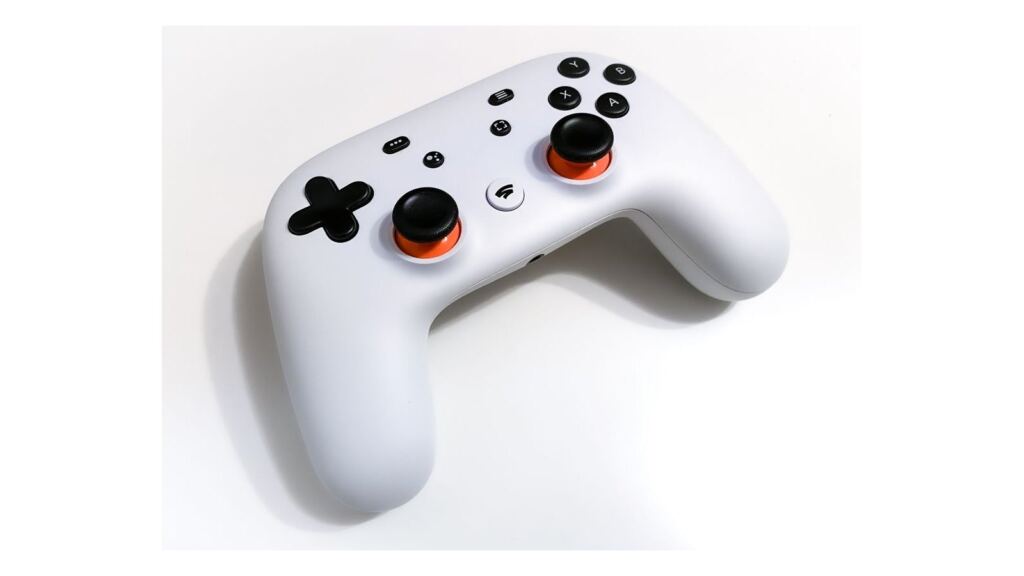
Those who lived through the console era remember that each new machine was announced with a box, a controller and a pile of cartridges or discs. On March 19, 2019, Google was getting ready to enter that market in a very different way. The presentation at the Game Developers Conference in San Francisco was scheduled for 2 p.m. Brasília time, with a live broadcast, and the mystery about what the company had created was big.
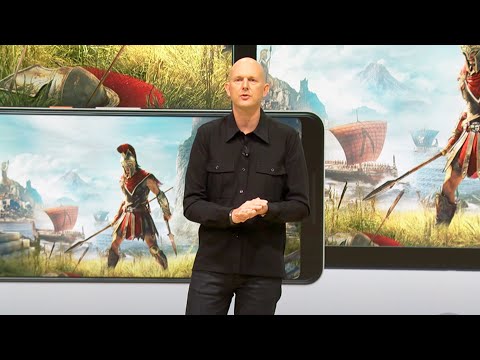
There were two bets on the table. One spoke of a cloud platform that would run games on Google’s servers and stream the image. The other spoke of a console with power similar to the Xbox One X, the strongest of the time, that would run games locally and also by streaming. The first hypothesis was the stronger one, because of a test done months earlier: in October 2018, Project Stream let players run the whole of Assassin’s Creed Odyssey inside the Chrome browser, without downloading anything. Days before GDC, Google had also hired Jade Raymond, former Assassin’s Creed producer, as a vice president.
Watch the broadcast:
What came next
The cloud bet won. At GDC, Google revealed Stadia, a streaming game service with resolution of up to 4K and its own controller that connected over Wi-Fi straight to the servers, to reduce lag. The service debuted on 19 November 2019, in 14 countries. In February 2021, Google closed its in-house studio, Stadia Games and Entertainment, and on 29 September 2022 it announced the end of the service, citing low adoption. Stadia went offline on 18 January 2023, and Google refunded hardware and game purchases. The controller got an update to work over Bluetooth. Like in the rental store days, only the controller was left to tell the story.
Source: Google, via Eurogamer.

Comments (0)
Be the first to comment.