

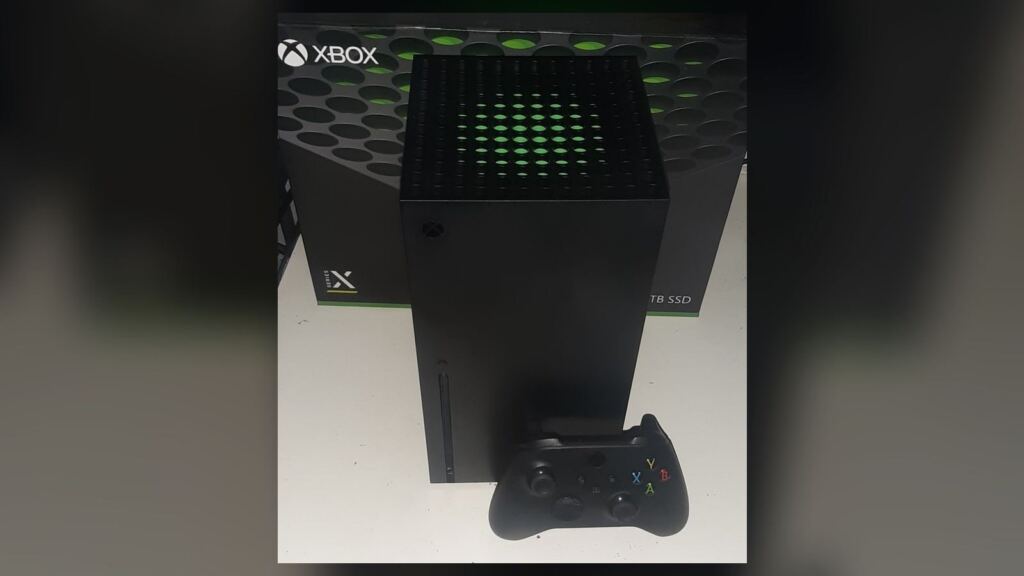
Numbers first: the Xbox Series X and Xbox Series S would reach stores on November 10, 2020, and at the start of that month only a small group of outlets and creators had the consoles in hand for testing. As usual, the first videos came from abroad, but Brazil also received units, and in early November 2020 the Adrenaline channel published a video in which Diego Kerber takes both devices apart piece by piece.

Translating the jargon, what the video shows is why the Series X has that tower shape. To double the Xbox One X’s graphics performance and quadruple its processor’s without making more noise, Microsoft calculated an internal consumption of about 315 W, which generates a lot of heat. The solution was to split the components across two boards: one with the main chip, the memory and the power regulation, and another handling the slower input and output functions. The boards sit on opposite sides of an aluminum chassis, forming air channels. Heatsink, shielding, power supply, disc drive and fan were fitted together like Tetris pieces, in the words of designer Chris Kujawski, and a single fan at the top pulls air through the whole assembly.
In practice, this means a console 30.1 cm tall with an internal power supply, sensors that adjust fan speed and the promise of being as quiet as the Xbox One X. The Series S follows the same logic in a body about 60% smaller: the main air exit is on the large side, and there is no disc drive. Both use a 7 nm AMD chip with an eight-core Zen 2 CPU and an RDNA 2 GPU, with 12.155 teraflops on the Series X and 4 teraflops on the Series S.
What came next
The consoles launched on November 10, 2020 and, in October 2024, Microsoft released new models, including a white Series X without a disc drive and a white 1 TB Series S. One thing hasn’t changed: the Series X is still, essentially, a big fan with a video game underneath.
Source: Adrenaline.



Comments (0)
Be the first to comment.